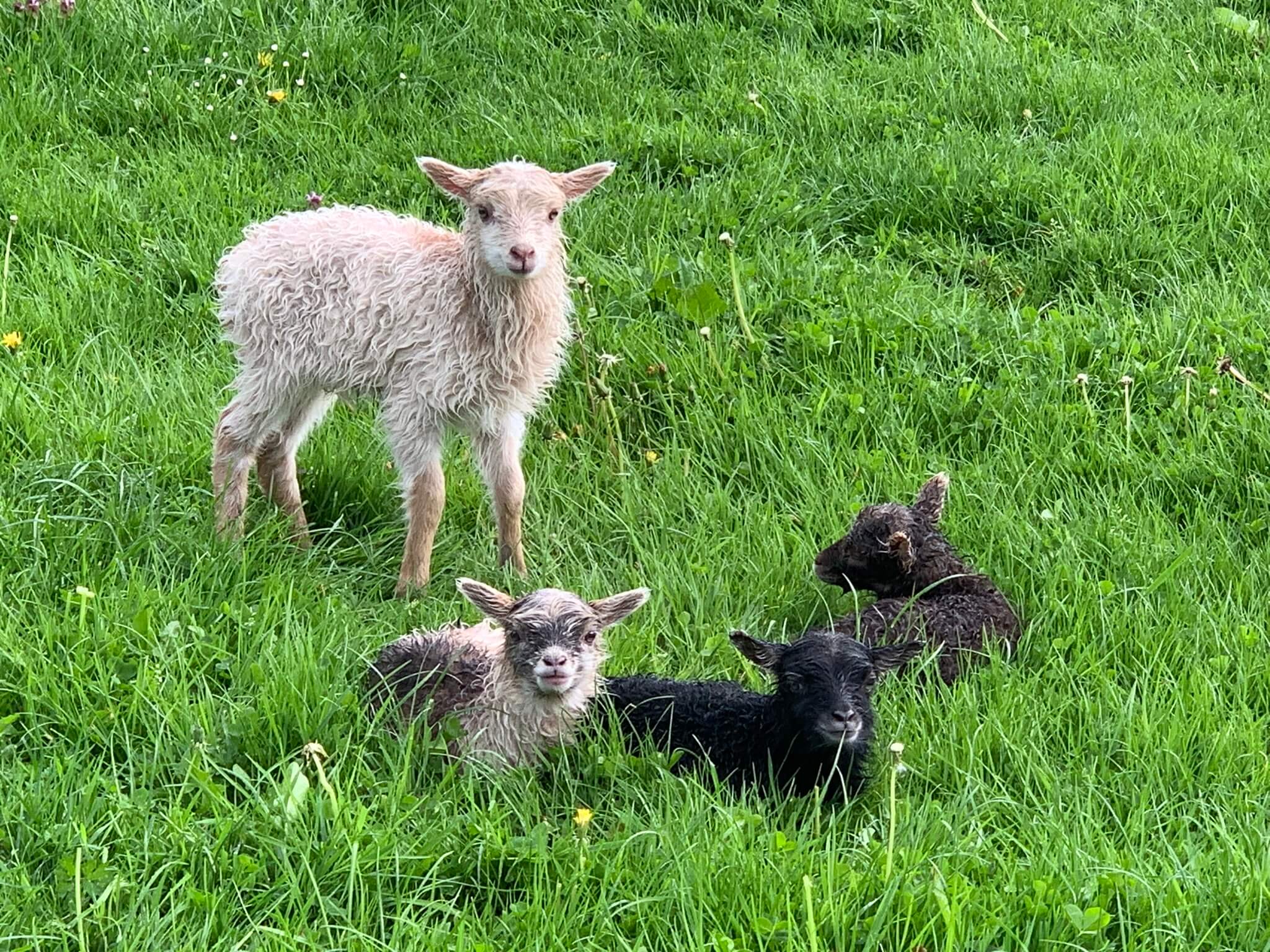
Here at Low Costa Mill our animals are part of the family. We’re proud to play a small part in preserving a fascinating piece of British livestock heritage: North Ronaldsay sheep. They are one of the world’s oldest and rarest breeds, boasting a rich history tied to one of Scotland’s most remote islands. We often get questions about their size and unusual look, so we thought it was time to share their story! We currently have a small flock of 18 sheep, including our main ram, Tormond, who is father to 14 of our flock.
A History Woven in Seaweed
The North Ronaldsay breed takes its name from the island of North Ronaldsay, the most northerly of the Orkney Islands on Scotland. In their native environment these hardy and colourful characters live almost entirely on the wild shoreline. Their native diet is almost entirely seaweed.
Back in the 19th century, islanders built a drystone wall, known as the “sheep dyke,” around the island’s coastline. This wall wasn’t to keep the sheep in the fields, but to keep them out!
Confined to the narrow shoreline, the sheep were forced to adapt to a unique diet of almost entirely seaweed. This is a remarkable adaptation that distinguishes them from almost all other domesticated sheep. Their digestive systems evolved to safely process this high-mineral, low-nutrition diet. They are therefore perfectly suited to foraging making them incredibly hardy and resilient.
Distinctive Looks and Character
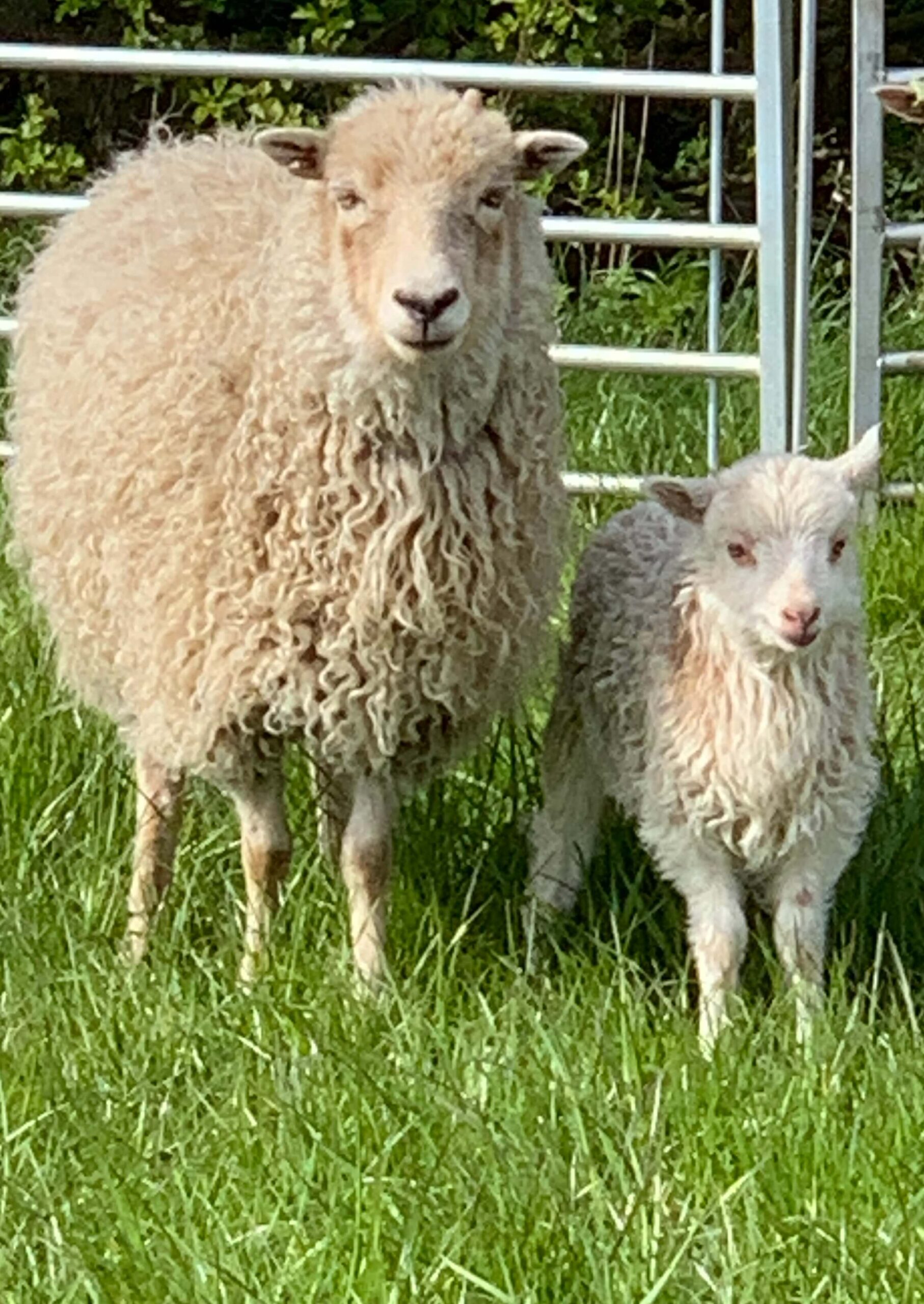
The North Ronaldsay sheep are small and slender breed, and highly varied in appearance, which adds to their charm! They look quite delicate but are incredibly tough.
Ewes weigh around 25kg and rams around 35kg, in contrast to our neighbouring Texels with Rams weighing around 100kg.
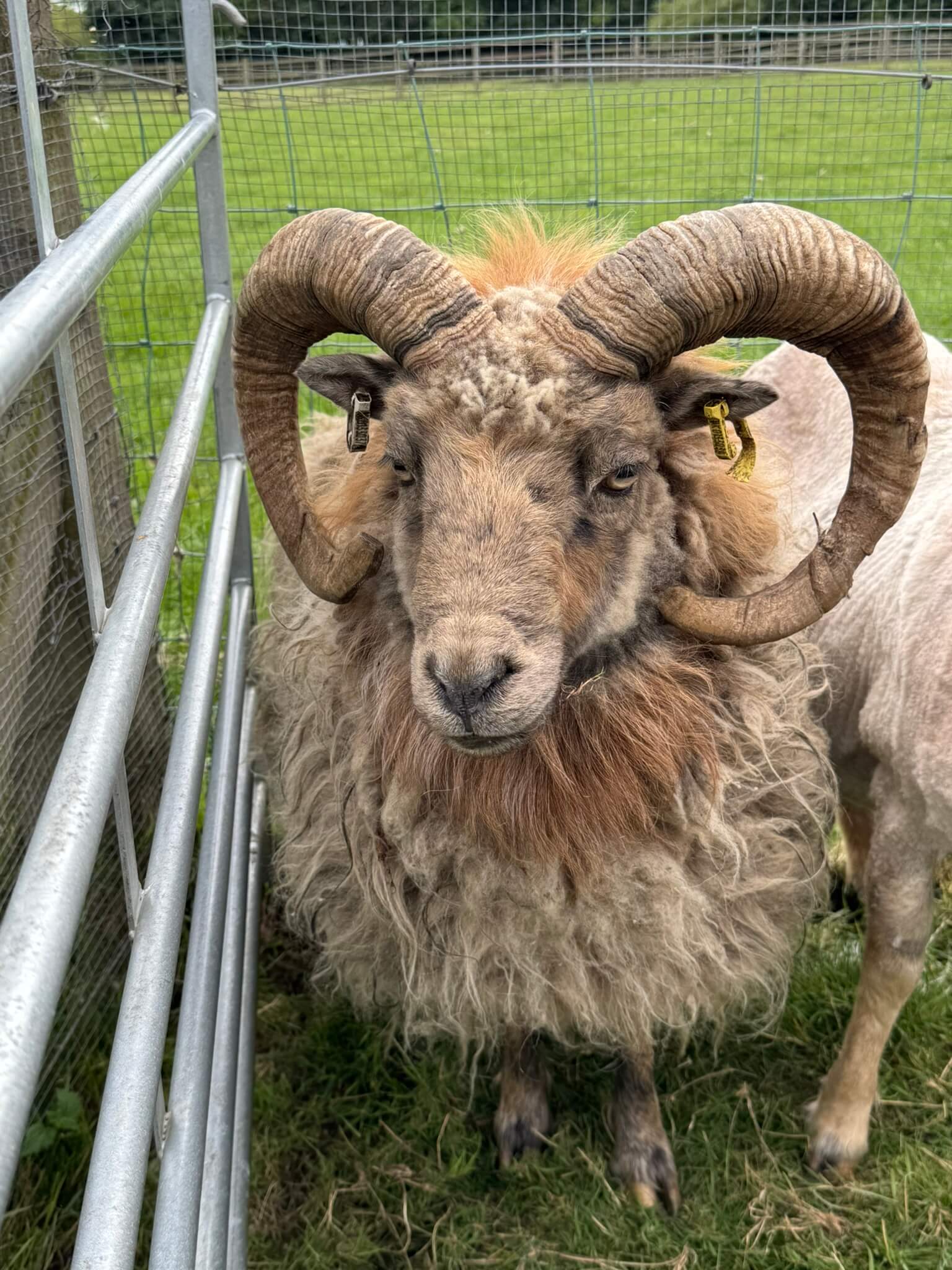
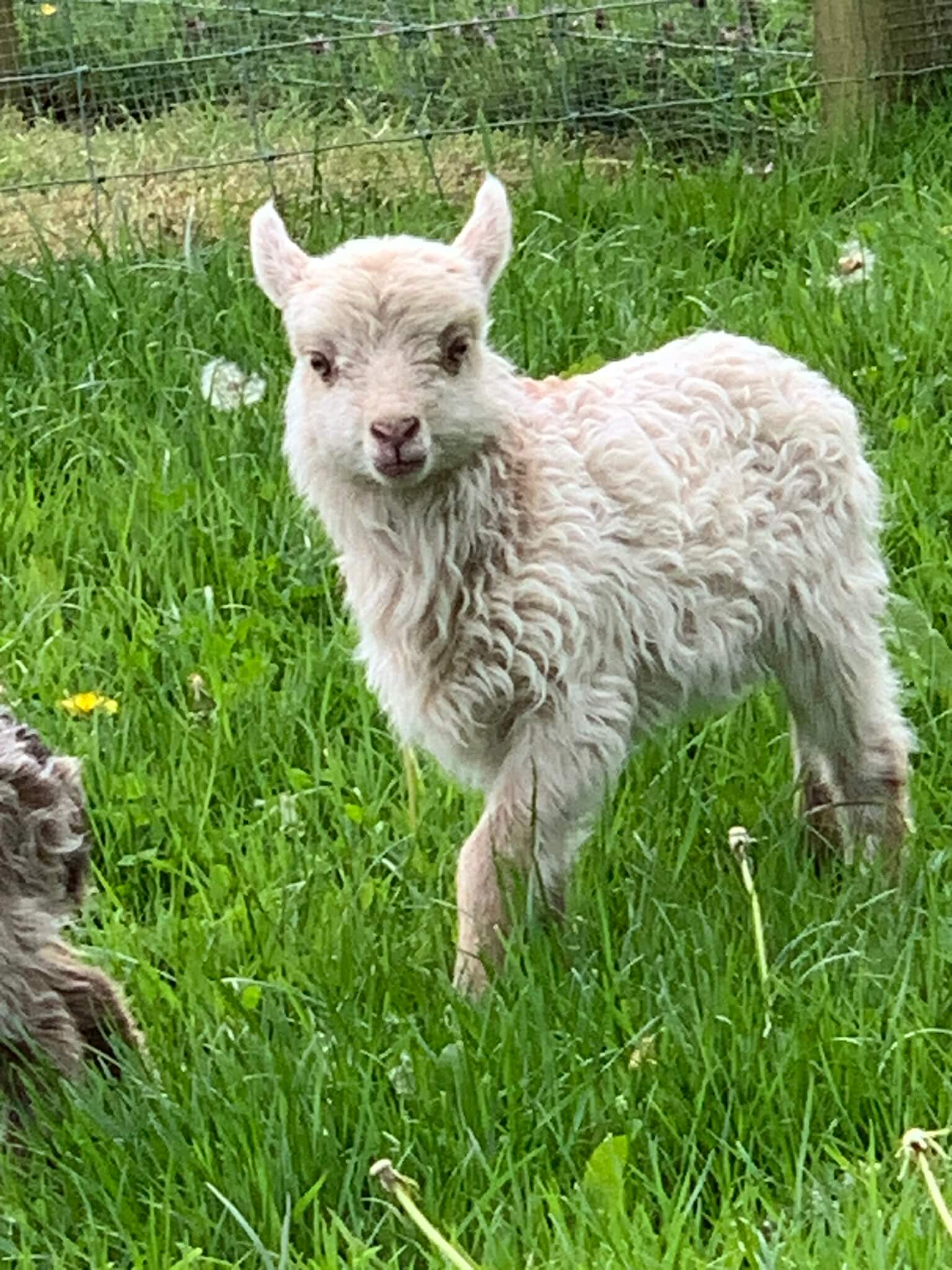
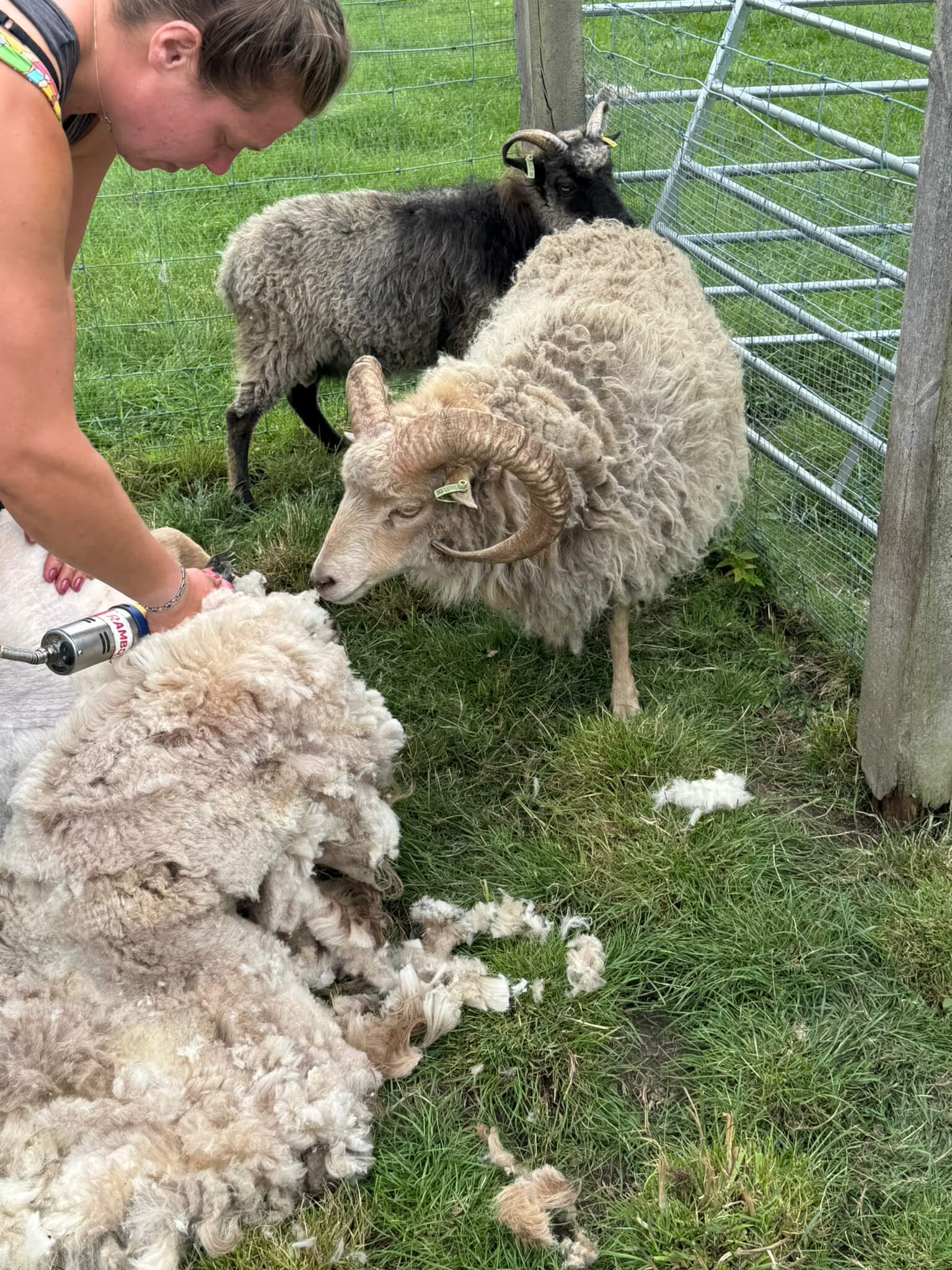
They have highly variable colouring, ranging from black, grey, and brown to various shades of white. Their wool is soft and highly prized for spinning. We have one Ewe who has black colouring, and she always produces a black lamb, although the darker colours do fade as the lambs get older, and markings become less prominent. The rams have impressive spiral horns, while the ewes have small straighter horns, or are hornless.
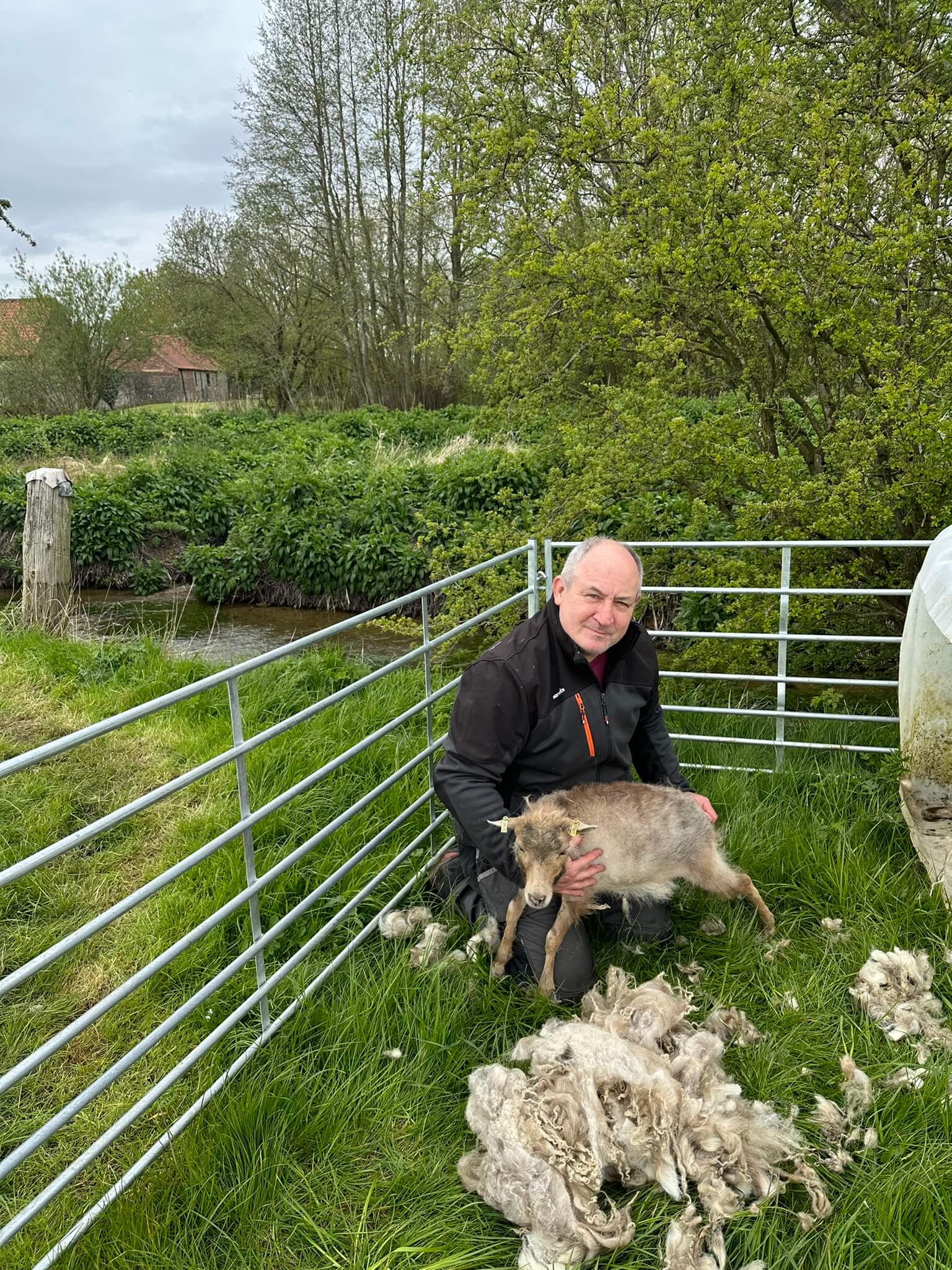
A sheep’s fleece will keep on growing and never stop. North Ronaldsay shed their fleece each summer and can look quite scruffy in the process. They can be sheared if required by machine if required, ours are usually sheared mid summer a couple of months after lambing. The fleece can be removed by hand in a process known as rooing – leaving incredibly soft hands.
Sheep Facts … Did you know???
- Ewes bleat to their lambs and have a unique noise that their own lambs recognise.
- Sheep are herbivores, their diet is mostly grass, plants and seeds.
- Their pupils are rectangular giving them almost upto 320 degree vision without turning their heads. (Humans can see around 155 degrees without turning their heads).
- Sheep have an excellent memory and can remember upto 50 individual sheep and people for years
Why We Keep This Rare Breed
For us, keeping North Ronaldsay sheep is about more than just having animals on the land. It’s about conservation, sustainability, and education.
As a rare breed, they maintain British livestock diversity. We help ensure their long-term survival by supporting the breed. The North Ronaldsay is classed as a high-priority rare breed by the Rare Breeds Survival Trust (RBST).
They are excellent, natural grazers. Unlike many commercial breeds, their primitive nature means they graze gently and thrive on rough grass and forage, which helps maintain the health of our pasture.
Our guests love meeting them! They are often curious, and their unique story always makes for a fun conversation.
When you are visiting, you can usually find part of our flock in the paddock adjacent to the goats. Be sure to stop by and say hello to these amazing, sea-faring land animals!